
Maharashtra State Board – Std. VII (English Medium)
Chapter 13 – Pythagoras’ Theorem
Practice Set 48 and 49
Practice Set 48
Q.1 Find the value of x.
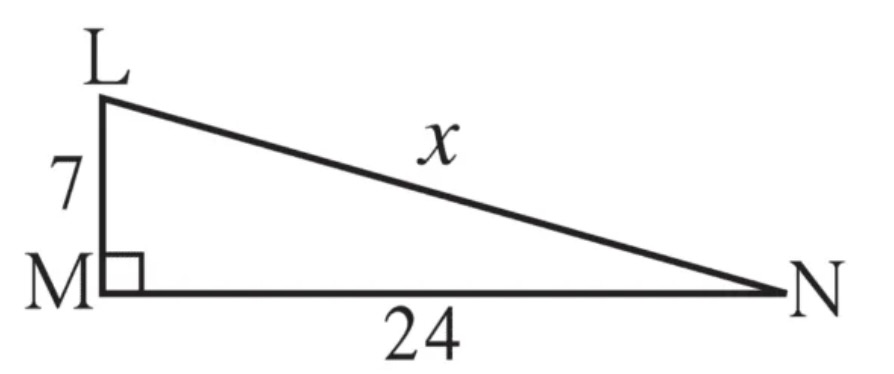
(i)
Given:
LM = 7 units
MN = 24 units
∠LMN = 90°
To find: x = LN
Solution:
In ∆LMN, ∠LMN = 90°
LN is the hypotenuse.
Using Pythagoras’ Theorem:
LN² = LM² + MN²
x² = 7² + 24²
x² = 49 + 576
x² = 625
x = 25
Ans: The value of x is 25 units.
(ii)
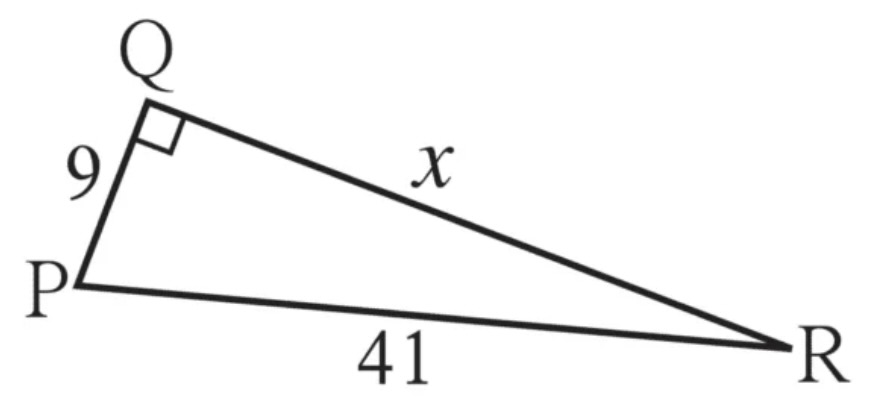
Given:
PQ = 9 units
PR = 41 units
∠PQR = 90°
To find: x = QR
Solution:
In ∆PQR, ∠PQR = 90°
PR is the hypotenuse.
PR² = PQ² + QR²
41² = 9² + x²
1681 = 81 + x²
x² = 1600
x = 40
Ans: The value of x is 40 units.
(iii)
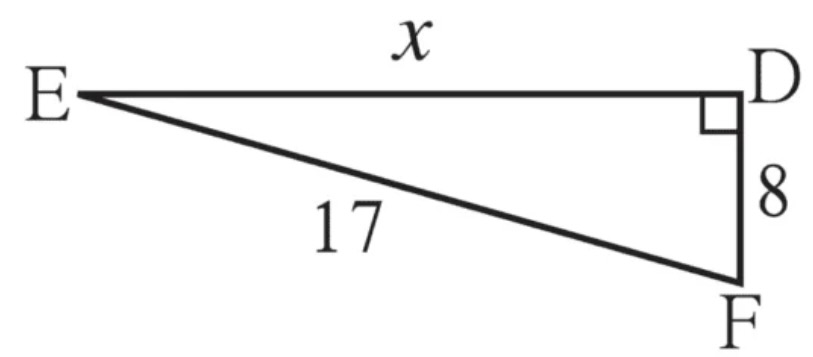
Given:
DF = 8 units
EF = 17 units
∠EDF = 90°
To find: x = ED
Solution:
In ∆EDF, EF is the hypotenuse.
EF² = ED² + DF²
17² = x² + 8²
289 = x² + 64
x² = 225
x = 15
Ans: The value of x is 15 units.
Q.2
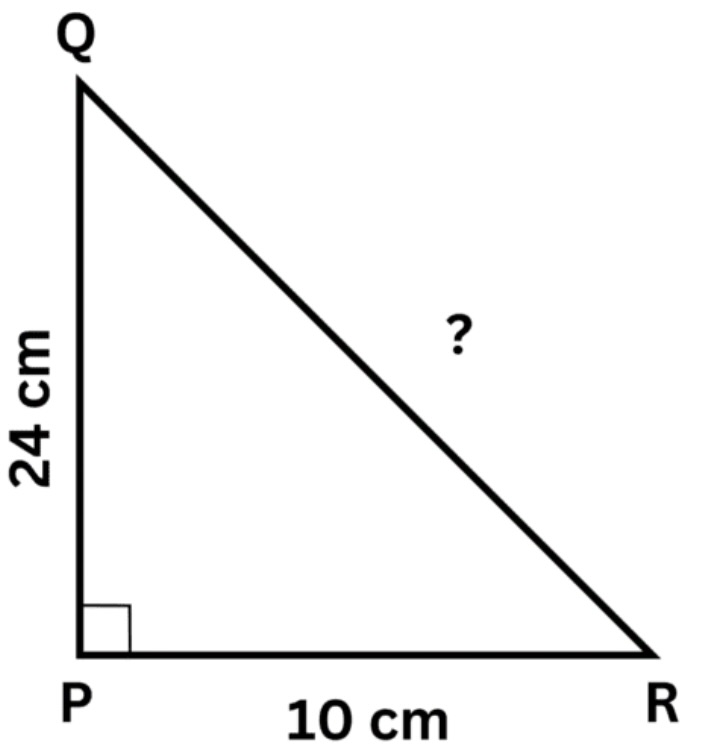
Given:
∠P = 90°
PQ = 24 cm
PR = 10 cm
To find: QR
Solution:
QR² = PQ² + PR²
QR² = 24² + 10²
QR² = 576 + 100
QR² = 676
QR = 26 cm
Ans: The length of QR is 26 cm.
Q.3
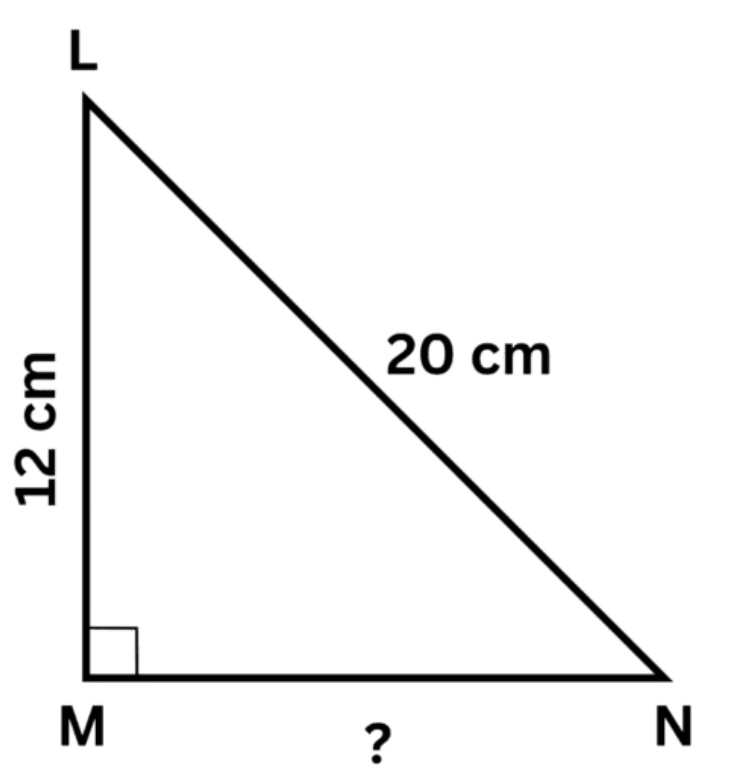
Given:
∠M = 90°
LM = 12 cm
LN = 20 cm
To find: MN
Solution:
LN² = LM² + MN²
20² = 12² + MN²
400 = 144 + MN²
MN² = 256
MN = 16 cm
Ans: The length of MN is 16 cm.
Q.4
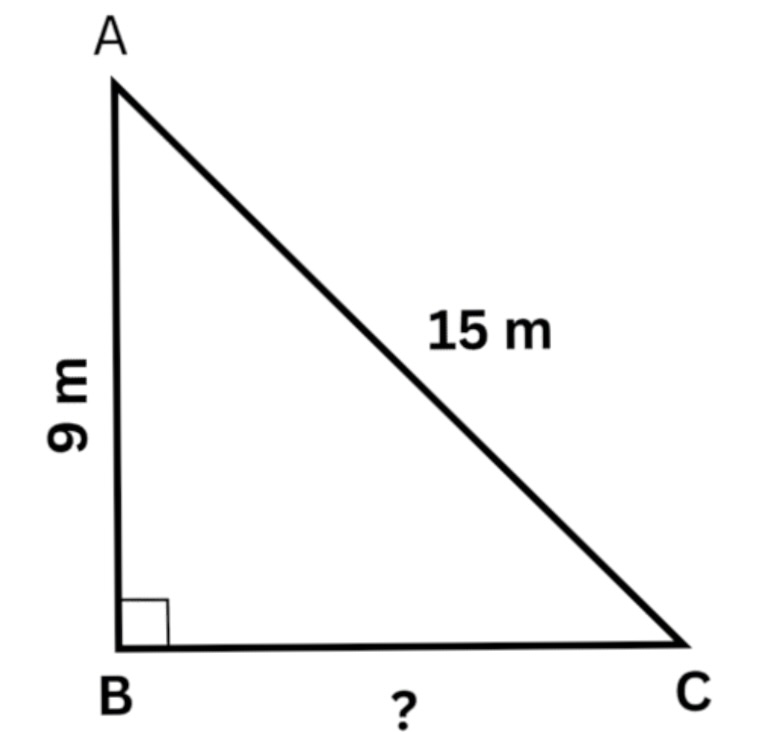
Given:
Length of ladder = 15 m
Height of wall = 9 m
To find: Distance from wall
Solution:
15² = 9² + x²
225 = 81 + x²
x² = 144
x = 12 m
Ans: The distance between the base of the wall and ladder is 12 m.
Practice Set 49
Q.1 Find the Pythagorean Triplets.
(i) 3, 4, 5
5² = 3² + 4²
25 = 9 + 16
25 = 25
Ans: 3, 4, 5 is a Pythagorean triplet.
(ii) 2, 4, 5
5² = 2² + 4²
25 ≠ 20
Ans: 2, 4, 5 is not a Pythagorean triplet.
(iii) 4, 5, 6
6² = 4² + 5²
36 ≠ 41
Ans: 4, 5, 6 is not a Pythagorean triplet.
(iv) 2, 6, 7
7² = 2² + 6²
49 ≠ 40
Ans: 2, 6, 7 is not a Pythagorean triplet.
(v) 9, 40, 41
41² = 9² + 40²
1681 = 81 + 1600
1681 = 1681
Ans: 9, 40, 41 is a Pythagorean triplet.
(vi) 4, 7, 8
8² = 4² + 7²
64 ≠ 65
Ans: 4, 7, 8 is not a Pythagorean triplet.
Q.2 Check whether the following are right-angled triangles.
(i) 8, 15, 17
17² = 8² + 15²
289 = 64 + 225
289 = 289
Ans: 8, 15, 17 forms a right-angled triangle.
(ii) 11, 12, 15
15² ≠ 11² + 12²
Ans: 11, 12, 15 does not form a right-angled triangle.
(iii) 11, 60, 61
61² = 11² + 60²
3721 = 121 + 3600
3721 = 3721
Ans: 11, 60, 61 forms a right-angled triangle.
(iv) 1.5, 1.6, 1.7
1.7² ≠ 1.5² + 1.6²
Ans: 1.5, 1.6, 1.7 does not form a right-angled triangle.
(v) 40, 20, 30
40² ≠ 20² + 30²
Ans: 40, 20, 30 does not form a right-angled triangle.