
Maharashtra State Board – Standard IX
Science
Chapter 15 – Life Processes in Living Organisms
🔹 1. Match the pairs and explain.
| A | B |
|---|---|
| 1. Growth of pollen tube towards ovule | b. Chemotropic movement |
| 2. Growth of shoot system | c. Phototropic movement |
| 3. Growth of root system | a. Gravitropic movement |
| 4. Growth towards water | e. Hydrotropic movement |
Ans:
- The growth of the pollen tube towards the ovule is a chemotropic movement because it occurs in response to chemical substances.
- The growth of the shoot system towards light is a phototropic movement because it responds to light.
- The growth of the root system towards gravity is a gravitropic movement because it responds to gravitational force.
- Growth towards water is a hydrotropic movement because it occurs in response to water.
🔹 2. Complete the paragraph.
Ans:
The milk was on the stove. Rasika was engrossed in watching television. She smelled something burning and ran towards the kitchen. The milk was boiling over. She held the vessel with her bare hands but, screaming, she let it go at once. This activity was controlled by nerve cells. The special ends of dendrites in these cells collected the information, which was then transferred to the cell body and then towards the terminal end of the axon. The chemicals produced at the terminal end passed through the minute space called the synapse. In this way, the impulse was conducted in the body and the process of reflex action was completed by conducting the impulses from nerve cells to muscle cells.
🔹 3. Write notes on:
a. Root pressure
Ans:
- The root cells are in contact with water and minerals present in the soil.
- Water enters the root cells due to osmotic pressure, making them turgid.
- The pressure developed in the roots due to water absorption is called root pressure.
- This pressure pushes water and minerals upward through the xylem.
- Root pressure is sufficient to lift water in small plants and shrubs.
b. Transpiration
Ans:
- Transpiration is the process by which plants lose water in the form of water vapour through stomata.
- Guard cells control the opening and closing of stomata.
- Water evaporates from the leaf surface during transpiration.
- This creates a suction force that helps in pulling water upward.
- Transpiration helps in the absorption and transport of water and minerals.
c. Nerve cell
Ans:
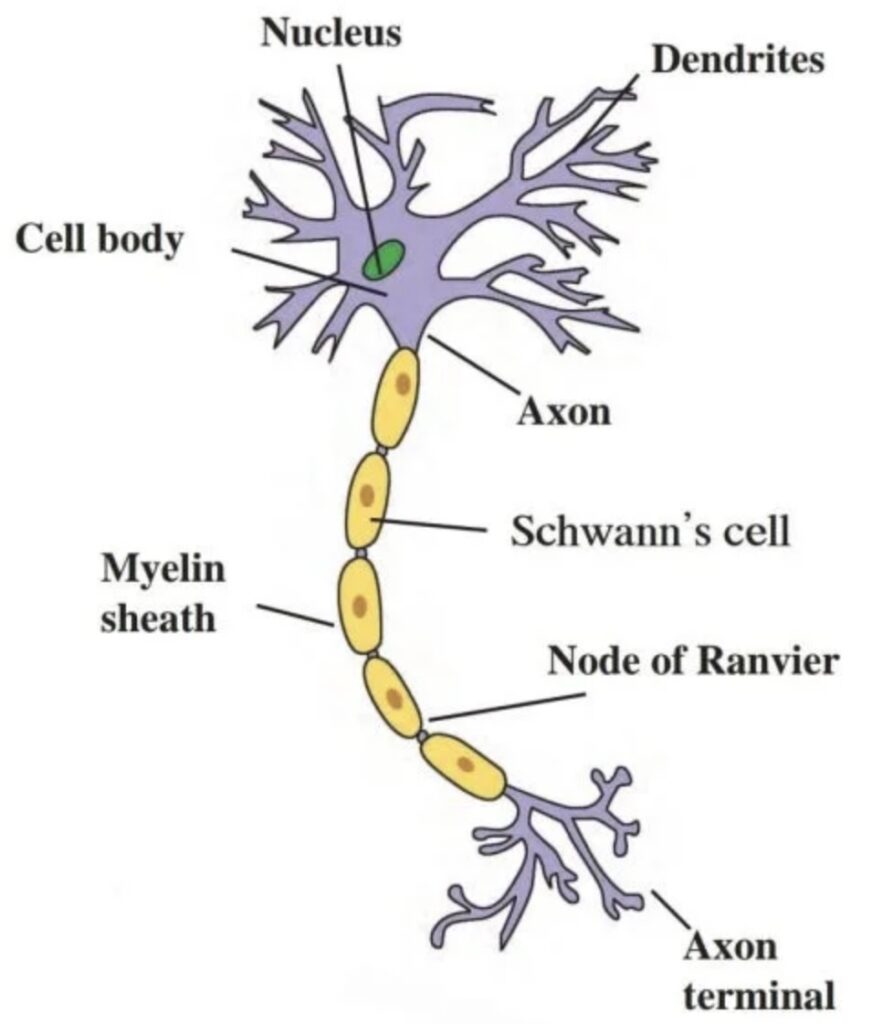
- A nerve cell, also called a neuron, is the structural and functional unit of the nervous system.
- It carries impulses from one part of the body to another.
- A neuron consists of dendrites, a cell body, and an axon.
- It has the ability to conduct electrochemical impulses.
- Supporting cells of neurons are called neuroglia.
d. Human brain
Ans:
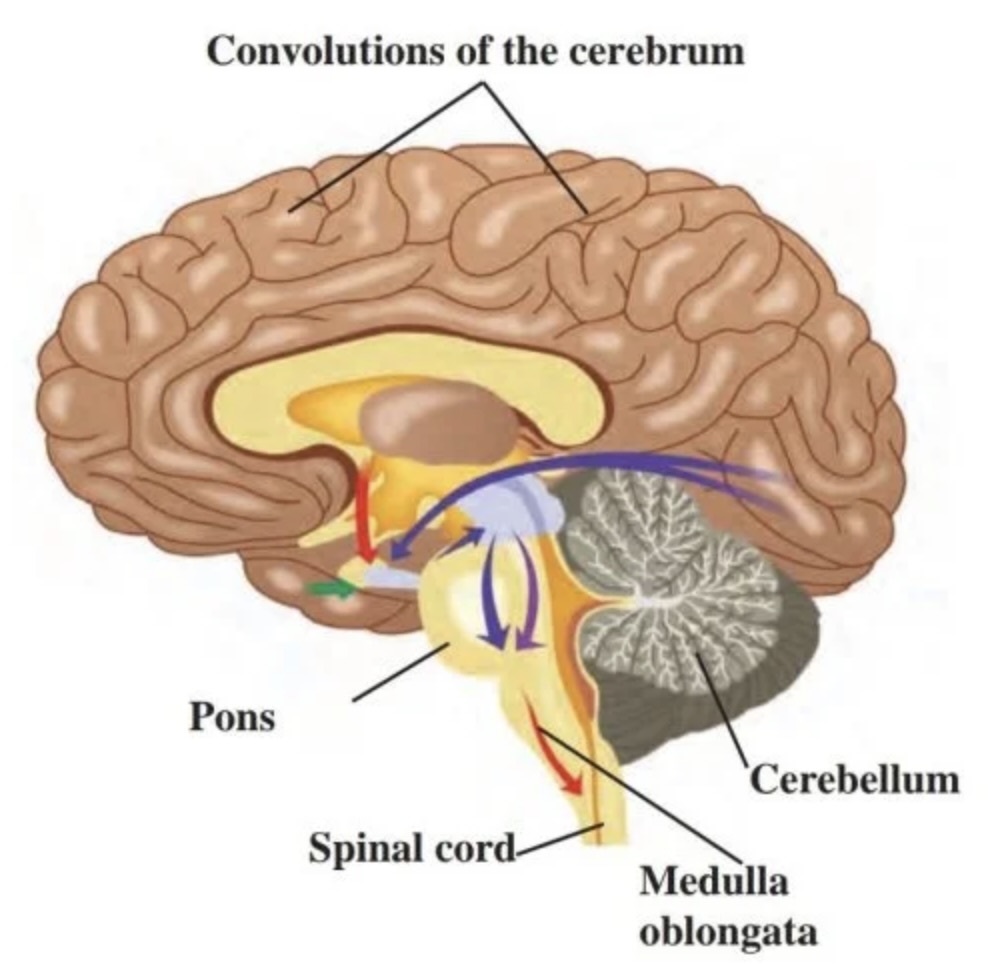
- The brain is the main controlling organ of the nervous system and is located in the cranial cavity.
- It is protected by three layers called meninges.
- The brain weighs about 1300–1400 grams in adults.
- It consists of three main parts: (a) Cerebrum: The largest part, responsible for thinking, memory, intelligence, and voluntary actions.
(b) Cerebellum: Controls balance and coordination of body movements.
(c) Medulla oblongata: Controls involuntary actions like breathing and heartbeat.
e. Reflex action
Ans:
- A reflex action is a quick and automatic response to a stimulus.
- It occurs without conscious thinking.
- The spinal cord plays an important role in reflex actions.
- For example, when we touch a hot object, we immediately withdraw our hand.
🔹 4. Name the hormones of the following endocrine glands and the function of each.
a. Pituitary gland
| Hormone | Function |
|---|---|
| Growth hormone | Stimulates growth of bones and body tissues |
| TSH | Stimulates thyroid gland |
| ACTH | Stimulates adrenal gland |
| Prolactin | Stimulates milk production |
| FSH | Controls growth of gonads |
| LH | Controls ovulation and menstrual cycle |
| Oxytocin | Causes uterine contraction during childbirth |
| ADH | Regulates water balance |
b. Thyroid gland
| Hormone | Function |
|---|---|
| Thyroxine | Controls metabolism and growth |
| Calcitonin | Regulates calcium level in blood |
c. Adrenal gland
| Hormone | Function |
|---|---|
| Adrenaline | Prepares body for emergency situations |
| Corticosteroids | Maintain salt balance and metabolism |
d. Thymus gland
| Hormone | Function |
|---|---|
| Thymosin | Develops immunity by controlling immune cells |
e. Testis
| Hormone | Function |
|---|---|
| Testosterone | Develops secondary sexual characters in males |
f. Ovary
| Hormone | Function |
|---|---|
| Oestrogen | Develops secondary sexual characters in females |
| Progesterone | Maintains pregnancy |
🔹 5. Draw and label the diagrams.
Ans:
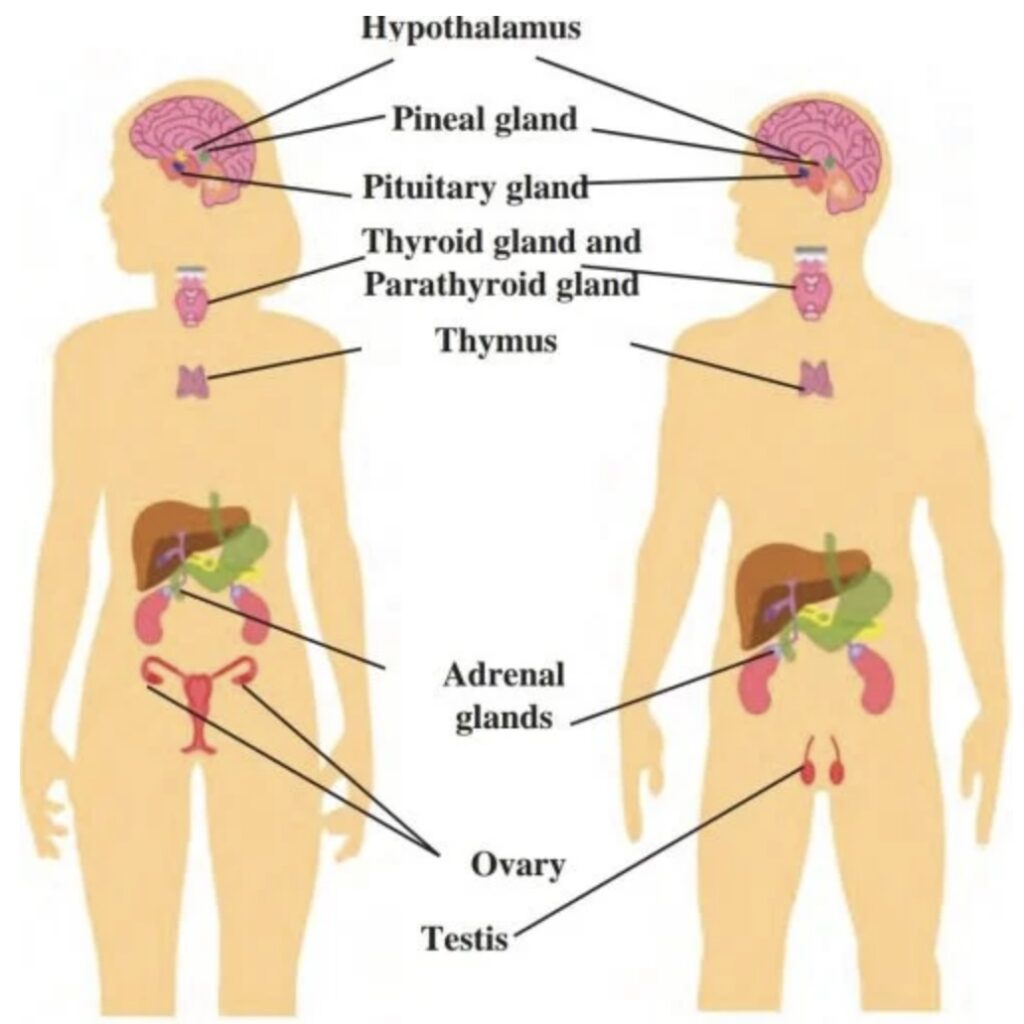
- Human endocrine glands
- Human brain
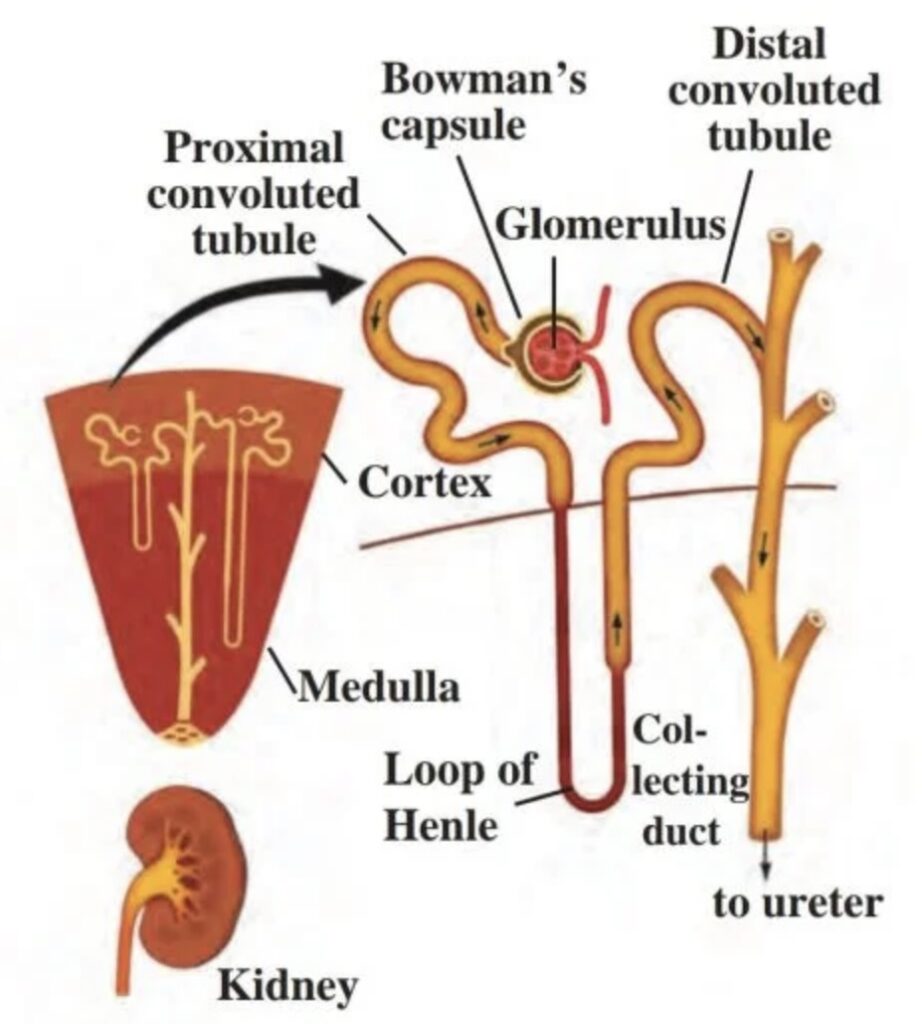
- Nephron
- Nerve cell
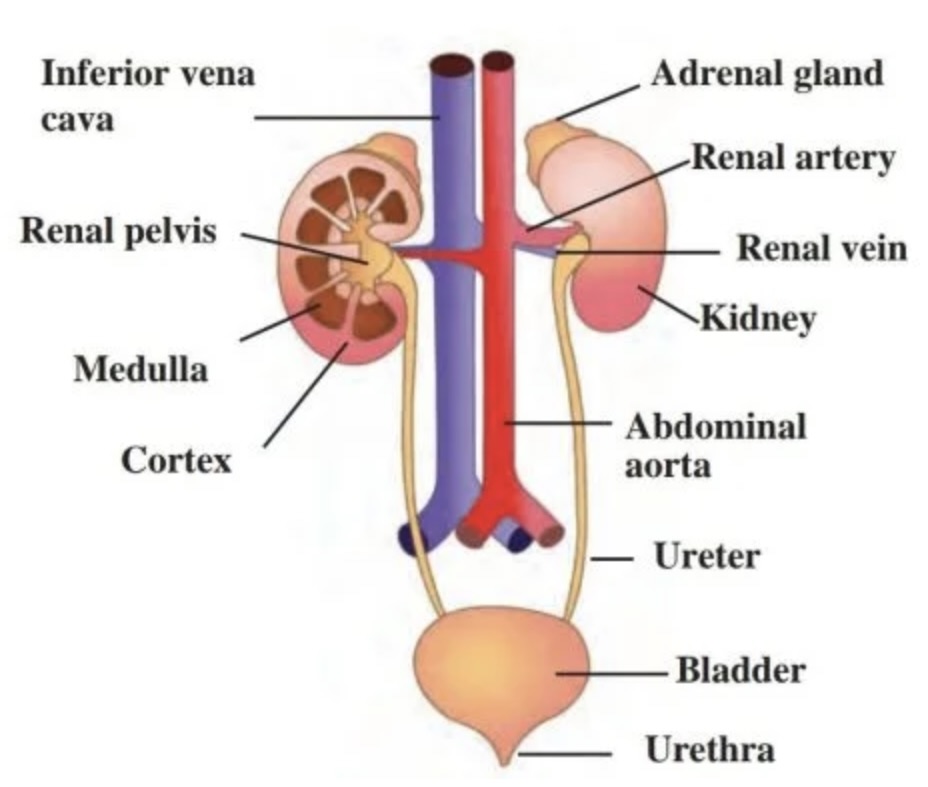
- Human excretory system
🔹 6. Answer the following.
a. Explain chemical coordination in humans and give the names and functions of some hormones.
Ans:
- Chemical coordination in humans is controlled by hormones.
- Hormones are secreted by endocrine (ductless) glands directly into the bloodstream.
- Hormones act slowly but their effects last longer.
- The endocrine system works along with the nervous system to control body activities.
Examples of hormones:
- Insulin: Controls blood sugar level.
- Thyroxine: Regulates metabolism.
- Growth hormone: Promotes growth.
- Testosterone: Develops male characteristics.
b. Explain the difference between the excretory system of humans and plants.
| Human Excretory System | Plant Excretory System |
|---|---|
| Has organs like kidneys | No special organs |
| Removes urea, uric acid | Stores waste in leaves, bark |
| Waste removed through urine | Waste like gum, resin, latex |
c. Explain coordination in plants with suitable examples.
Ans:
- Plants respond to stimuli but do not have a nervous system.
- Movements in plants are called tropic movements.
- Growth towards light is phototropism.
- Growth towards gravity is gravitropism.
- The closing of Mimosa leaves on touch is a growth-irrelevant movement.
🔹 7. Explain in your own words with suitable examples.
a. What is meant by coordination?
Ans: Coordination is the orderly functioning of different organs and systems in the body. It ensures that all activities take place smoothly and in proper sequence. Proper coordination helps maintain balance in the body, which is called homeostasis.
b. How does excretion occur in human beings?
Ans:
- The kidneys filter waste materials from the blood.
- The functional unit of the kidney is the nephron.
- Urea and other wastes are removed and urine is formed.
- Urine is stored in the urinary bladder and expelled through the urethra.
c. How is excretion in plants useful to human beings?
Ans:
- Plants release oxygen during photosynthesis, which is essential for respiration.
- Plant wastes like gum, resin, and latex are useful to humans.
d. Describe the transportation system in plants.
Ans:
- Plants have xylem and phloem tissues.
- Xylem transports water and minerals from roots to leaves.
- Phloem transports food prepared in leaves to other parts of the plant.
- Transpiration and root pressure help in water transport.