Maharashtra State Board – Standard IX
Science
Chapter 16 – Heredity and Variation
🔹 1. Complete the following sentences by choosing the appropriate words from the brackets.
(Inheritance, sexual reproduction, asexual reproduction, chromosomes, DNA, RNA, gene)
a. Hereditary characters are transferred from parents to offsprings by …………, hence they are said to be structural and functional units of heredity.
Ans: Hereditary characters are transferred from parents to offspring by genes; hence, genes are called the structural and functional units of heredity.
b. Organisms produced by ………… show minor variations.
Ans: Organisms produced by asexual reproduction show minor variations.
c. The component which is in the nuclei of cells and carries the hereditary characteristics is called ………….
Ans: The component present in the nucleus of cells that carries hereditary characteristics is called chromosomes.
d. Chromosomes are mainly made up of ………….
Ans: Chromosomes are mainly made up of DNA.
e. Organisms produced through ………… show major variations.
Ans: Organisms produced through sexual reproduction show major variations.
🔹 2. Explain the following.
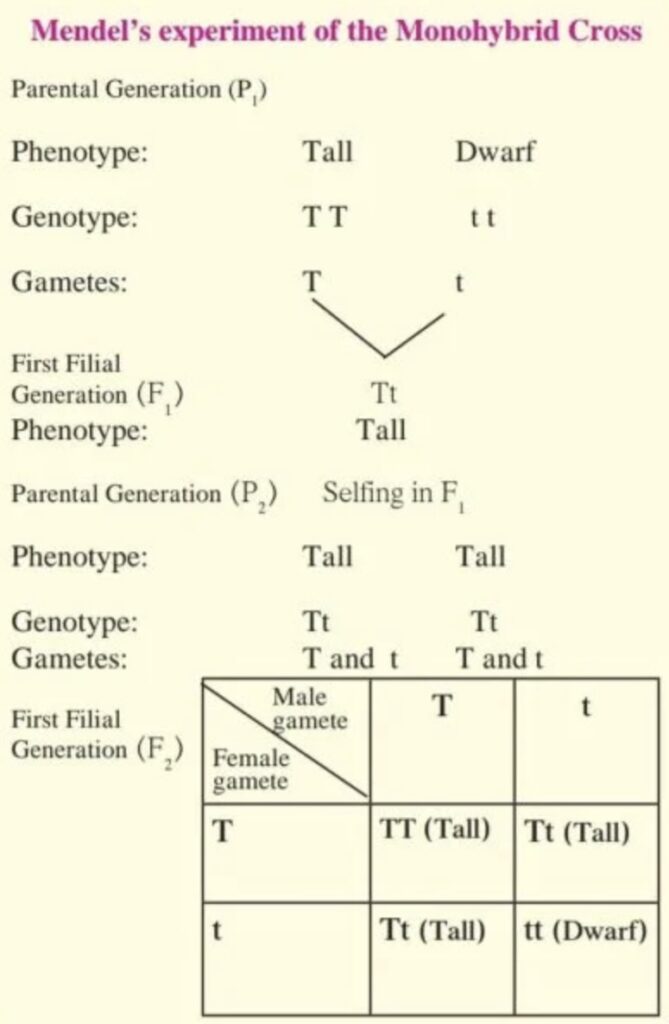
a. Explain Mendel’s monohybrid progeny with the help of any one cross.
Ans:
- Mendel carried out a cross between two pea plants having one pair of contrasting characters. This type of cross is called a monohybrid cross.
- He crossed a tall pea plant (TT) with a dwarf pea plant (tt). This is called the parental generation (P₁).
- All plants in the F₁ generation were tall (Tt). This shows that the gene for tallness is dominant over the gene for dwarfness.
- When the F₁ plants were self-pollinated, they produced the F₂ generation.
- In the F₂ generation, tall and dwarf plants appeared in the ratio of 3 : 1.
- The genotypic ratio in F₂ is 1 TT : 2 Tt : 1 tt, and the phenotypic ratio is 3 tall : 1 dwarf.
b. Explain Mendel’s dihybrid ratio with the help of any one cross.
Ans:
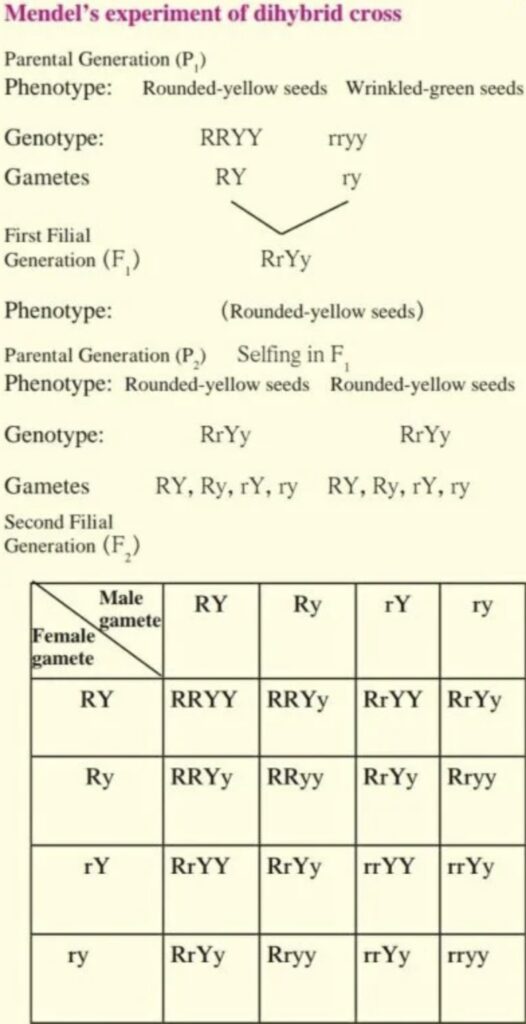
- In a dihybrid cross, Mendel studied two pairs of contrasting characters at the same time.
- He crossed a pea plant with round yellow seeds (RRYY) and a plant with wrinkled green seeds (rryy).
- All plants in the F₁ generation had round yellow seeds (RrYy), as round shape and yellow colour are dominant traits.
- The F₁ plants produced four types of gametes: RY, Ry, rY, and ry.
- When F₁ plants were self-pollinated, the F₂ generation showed four phenotypes: round yellow, round green, wrinkled yellow, and wrinkled green.
- The phenotypic ratio in F₂ was 9 : 3 : 3 : 1.
- The genotypic ratio was 1 : 2 : 1 : 2 : 4 : 2 : 1 : 2 : 1.
c. Distinguish between monohybrid and dihybrid cross.
| Monohybrid Cross | Dihybrid Cross |
|---|---|
| (i) It involves one pair of contrasting characters. | (i) It involves two pairs of contrasting characters. |
| (ii) F₁ generation produces two types of gametes. | (ii) F₁ generation produces four types of gametes. |
| (iii) The phenotypic ratio in F₂ is 3 : 1. | (iii) The phenotypic ratio in F₂ is 9 : 3 : 3 : 1. |
d. Is it right to avoid living with a person suffering from a genetic disorder?
Ans:
- Genetic disorders are inherited from parents through genes.
- They are non-communicable diseases and do not spread by living together or by contact.
- Therefore, it is not right to avoid living with a person suffering from a genetic disorder.
- Such individuals deserve care, understanding, and support.
🔹 3. Answer the following questions in your own words.
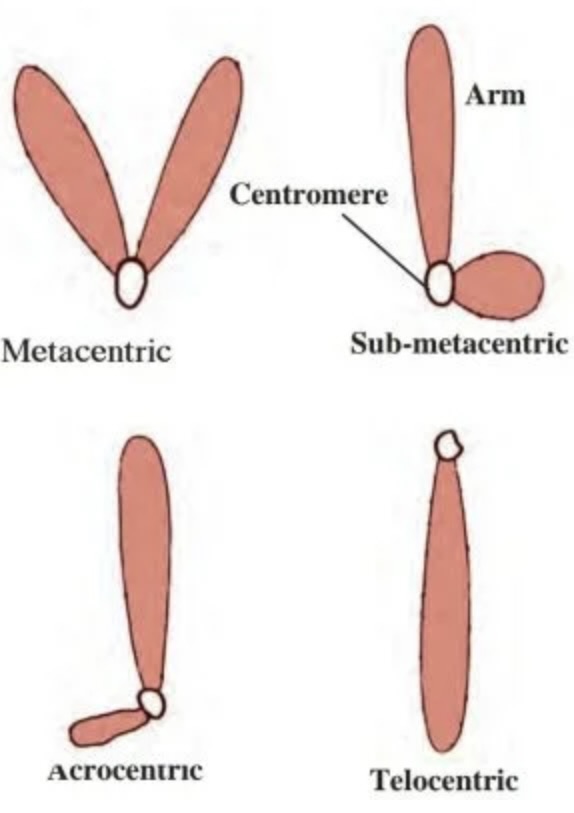
a. What is meant by ‘chromosome’? Explain its types.
Ans:
- A chromosome is a structure present in the nucleus of a cell that carries hereditary information.
- It is mainly made up of DNA and proteins.
- Based on the position of the centromere, chromosomes are of four types:
- Metacentric: The centromere is in the middle, and both arms are equal.
- Submetacentric: The centromere is slightly away from the middle, and one arm is shorter.
- Acrocentric: The centromere is near one end, and one arm is very short.
- Telocentric: The centromere is at the end, and the chromosome has only one arm.
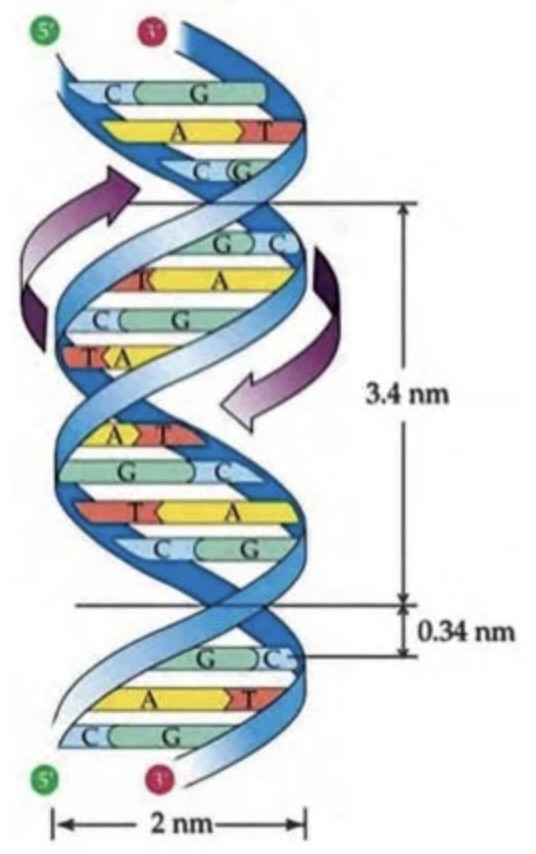
b. Describe the structure of the DNA molecule.
Ans:
- In 1953, Watson and Crick proposed the double helix model of DNA.
- DNA consists of two strands coiled around each other like a twisted ladder.
- Each strand is made up of repeating units called nucleotides.
- Each nucleotide contains a sugar molecule, a phosphate group, and a nitrogenous base.
- The four nitrogenous bases are adenine (A), guanine (G), cytosine (C), and thymine (T).
- Adenine pairs with thymine, and cytosine pairs with guanine through hydrogen bonds.
- The sugar and phosphate form the sides of the ladder, while the base pairs form the rungs.
c. Express your opinion about the use of DNA fingerprinting.
Ans:
- DNA fingerprinting is a technique used to identify a person by analyzing their unique DNA pattern.
- It is widely used in forensic science to identify criminals.
- It is also helpful in solving paternity and maternity disputes.
- DNA fingerprinting is unique to every individual.
- It was developed by Sir Alec Jeffreys.
- This technique is very useful in criminal investigations and medical research.
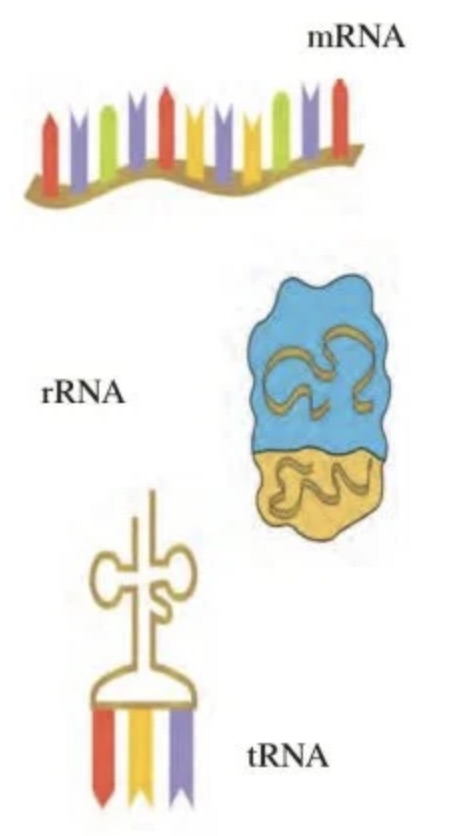
d. Explain the structure, function and types of RNA.
Ans:
- RNA (Ribonucleic Acid) is a nucleic acid present in cells.
- It is made up of ribose sugar, phosphate group, and nitrogenous bases (adenine, guanine, cytosine, and uracil).
- RNA is usually single-stranded.
- Its main function is protein synthesis.
Types of RNA:
- mRNA (Messenger RNA): Carries genetic information from DNA to ribosomes.
- tRNA (Transfer RNA): Brings amino acids to the ribosome during protein synthesis.
- rRNA (Ribosomal RNA): Forms a part of ribosomes and helps in protein synthesis.
e. Why is it necessary for people to have their blood examined before marriage?
Ans:
- Blood tests before marriage help detect genetic disorders that may be passed on to children.
- It helps couples take necessary precautions and medical advice.
- Blood tests can also detect infectious diseases such as HIV and syphilis.
- Therefore, such tests help in ensuring healthy future generations.
🔹 4. Write short notes.
a. Down syndrome
Ans:
- Down syndrome is a genetic disorder caused by an extra chromosome in the 21st pair (Trisomy 21).
- A person with Down syndrome has 47 chromosomes instead of 46.
- It leads to intellectual disability and physical differences.
- Common features include short height, flat facial features, and a single crease on the palm.
- Early medical care and support can improve quality of life.
b. Monogenic disorders
Ans:
- Monogenic disorders are caused by mutation in a single gene.
- Such disorders affect the normal functioning of the body.
- Examples include sickle cell anaemia, haemophilia, cystic fibrosis, and albinism.
- These disorders are inherited from parents.
c. Sickle cell anaemia: Symptoms and treatment
Ans:
- Sickle cell anaemia is a hereditary disorder caused by mutation in a gene responsible for haemoglobin formation.
- Red blood cells become sickle-shaped instead of biconcave.
- This reduces the oxygen-carrying capacity of blood.
Symptoms:
- Joint pain
- Swelling of hands and legs
- Fatigue
- Frequent infections
Treatment:
- Regular medical check-ups
- Folic acid supplements
- Proper nutrition and care
🔹 5. How are the items in groups A, B and C inter-related?
| A | B | C |
|---|---|---|
| Leber hereditary optic neuropathy | Mitochondrial disorder | This disorder arises due to mutation in mitochondrial DNA |
| Diabetes | Polygenic disorder | It affects blood glucose level |
| Albinism | Monogenic disorder | Pale skin and white hair |
| Turner syndrome | 45 + X | Females are sterile |
| Klinefelter syndrome | 44 + XXY | Males are sterile |
🔹 6. Filling the blanks based on the given relationship.
a. 44+X : Turner syndrome :: 44+XXY : …………
Ans: Klinefelter syndrome
b. 3:1 : Monohybrid :: 9:3:3:1 : …………
Ans: Dihybrid
c. Women : Turner syndrome :: Men : …………
Ans: Klinefelter syndrome
🔹 7. Complete the tree diagram below based on types of hereditary disorders.
Ans: Hereditary Disorders
│
├── 1. Monogenic Disorders
│ │
│ ├── Sickle cell anaemia
│ ├── Haemophilia
│ ├── Albinism
│ ├── Cystic fibrosis
│ └── Phenylketonuria
│
├── 2. Polygenic Disorders
│ │
│ ├── Diabetes
│ ├── Hypertension
│ └── Heart disease
│
├── 3. Chromosomal Disorders
│ │
│ ├── Down syndrome (Trisomy 21)
│ ├── Turner syndrome (45 + X)
│ └── Klinefelter syndrome (44 + XXY)
│
└── 4. Mitochondrial Disorders
│
└── Leber hereditary optic neuropathy (LHON)